Software-Defined Defense (SDD) at IBM
Our path towards an SDD-enabled defense
The war in Ukraine demonstrates that rapid innovation is key to the success of modern armed forces. Shorter development cycles, limited hardware resources on platforms and new procurement strategies call for software-defined architectural approaches. SDD separates hardware and software, creates a flexible and scalable IT landscape, and describes an approach in which military capabilities are increasingly defined, controlled and updated by software.
Platforms such as vehicles, aircraft, drones, and command and weapon systems are based on open, modular and digitally integrated architectures. Added value no longer stems solely from the hardware itself, but from the ability to adapt functions quickly, make data usable across systems, and continuously deploy new software capabilities.
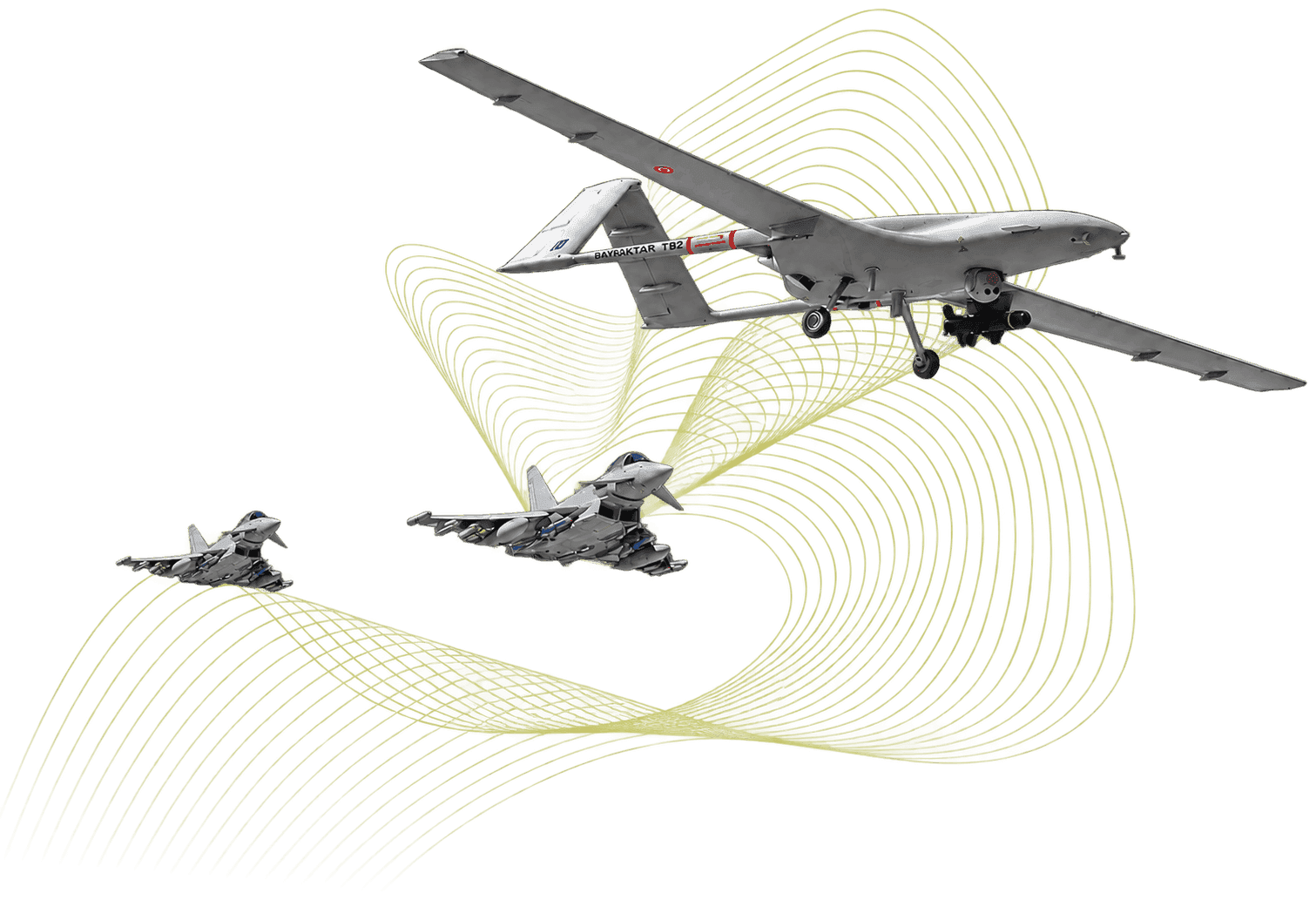
We need to become more agile and improve the integration of our armed forces. It is no longer a question of having the best tank, the best frigate or the best fighter aircraft, but of integrating all these capabilities with one another.

SDD is intended to bring about change in three main areas:

Quickly adaptable
Skills can be introduced or adapted within a short space of time.

Openly networked
Systems and partners work together seamlessly.

Independent
From individual manufacturers or proprietary platforms.
SDD applies the principles of modern software development to the defense sector: short innovation cycles, continuous updates, scalability and resilient architectures. In future, it should be possible to expand capabilities more quickly and cost-effectively using standardised software modules, open interfaces and middleware – without having to fundamentally replace existing systems or infrastructure.
The key characteristics of SDD are open and modular architectures, standardised interfaces, software-based capability expansion, continuous integration and updating of software, and a high degree of interoperability between systems and platforms. Crucial to this is the ability to deliver new functions with a similar level of flexibility to that seen in applications within modern digital ecosystems.
To gain a deeper understanding of the SDD transformation, please feel free to download the joint white paper by EY and IBM.
 EY & IBM · February 2025 · 8 pages · German · PDF · free of charge
Software-Defined Defense (SDD) at IBM
The end of monolithic ‘black boxes’
For decades, IBM has been synonymous with open and service-oriented architectures. Through its research, software, hybrid cloud, AI and cybersecurity, it possesses the technological expertise to provide comprehensive support for the Software-Defined Defense approach and to create a robust foundation for modern, interoperable and future-proof defence capabilities.
IBM supports interoperable and open system architectures that enable the flexible integration of new capabilities.
IBM helps to connect heterogeneous systems securely and efficiently via standardised interfaces.
IBM’s containerised software components can be flexibly integrated into various hardware infrastructures, further developed and scaled.
Using modern development approaches, IBM supports the rapid and agile advancement of military capabilities through software.
IBM solutions enable the integration of existing legacy systems to facilitate the gradual modernisation of existing IT environments.
IBM uses DevSecOps approaches to enable the secure, continuous deployment and updating of software.
IBM connects systems, data and applications through hybrid cloud and edge architectures.
IBM is strengthening the resilience of critical systems through ‘security by design’ and cybersecurity solutions.
IBM supports data-driven decision-making through real-time AI and analytics capabilities.
IBM enables flexible and scalable IT environments to meet dynamic operational requirements.
IBM relies on open technologies and transparent architectures to reduce dependencies.
IBM brings together research, technology and consultancy to accelerate the translation of innovations into practical applications.
Software-Defined Defense (SDD) at IBM
Defence industry supplier
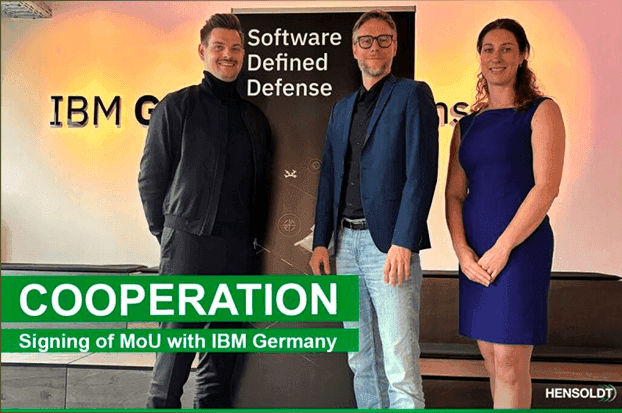
IBM is supporting the defence industry on its journey towards SDD: In May 2026, HENSOLDT and IBM Germany signed a Memorandum of Understanding in the field of Software-Defined Defence.
Through the ‘MDOcore’ initiative, HENSOLDT aims to connect weapon systems and sensors on the battlefield via software, consolidate highly sensitive military data from different systems, and carry out complex data analyses for data fusion.